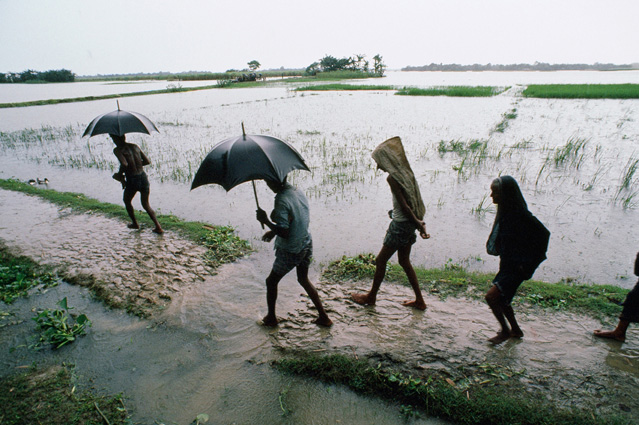





• Villagers in flooded rice paddies during monsoon season,
Nishantapur, Bangladesh
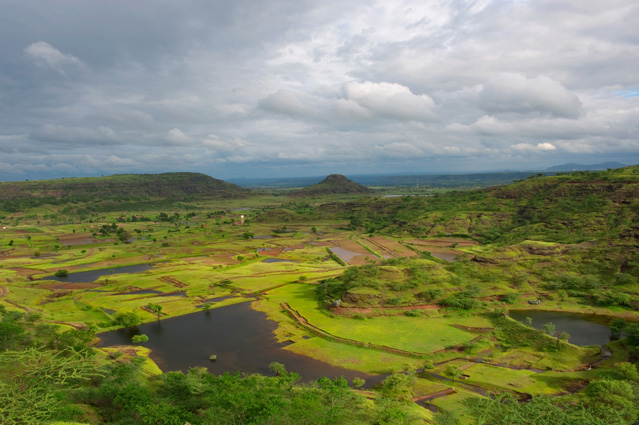
• Wet season in Satichiwadi, Maharashtra, India
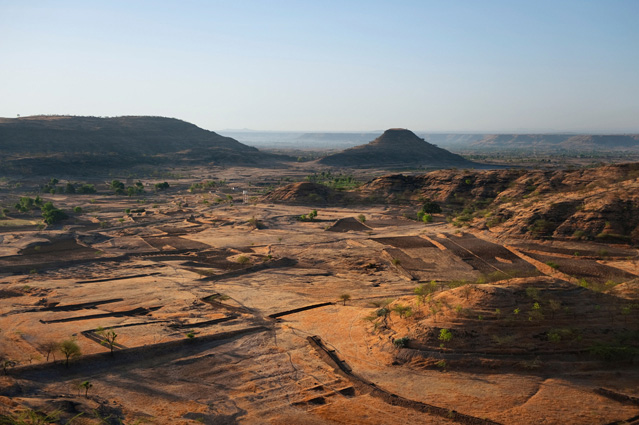
• Dry season in Satichiwadi, Maharashtra, India
Nishantapur, Bangladesh
• Wet season in Satichiwadi, Maharashtra, India
• Dry season in Satichiwadi, Maharashtra, India
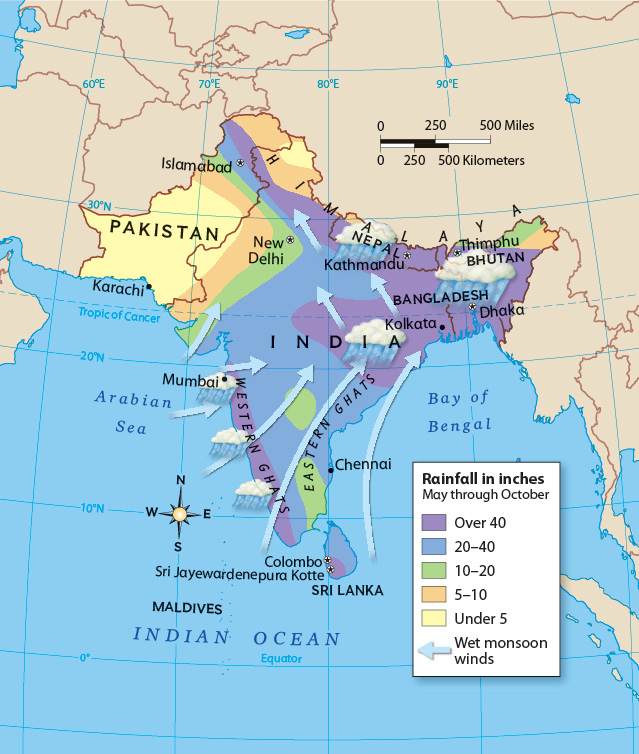
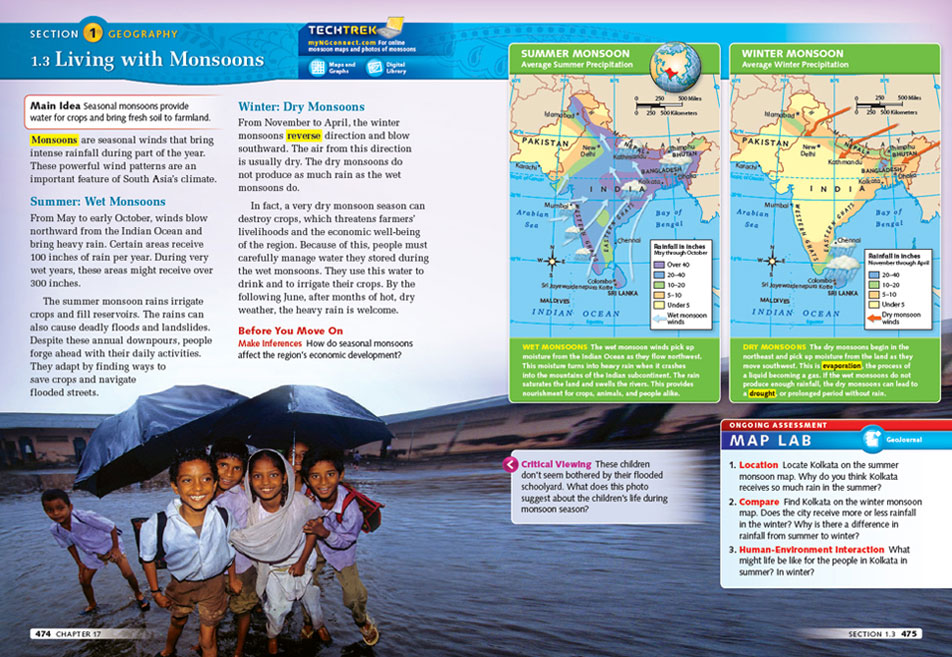
• Summer Monsoon Map: Average Summer Precipitation
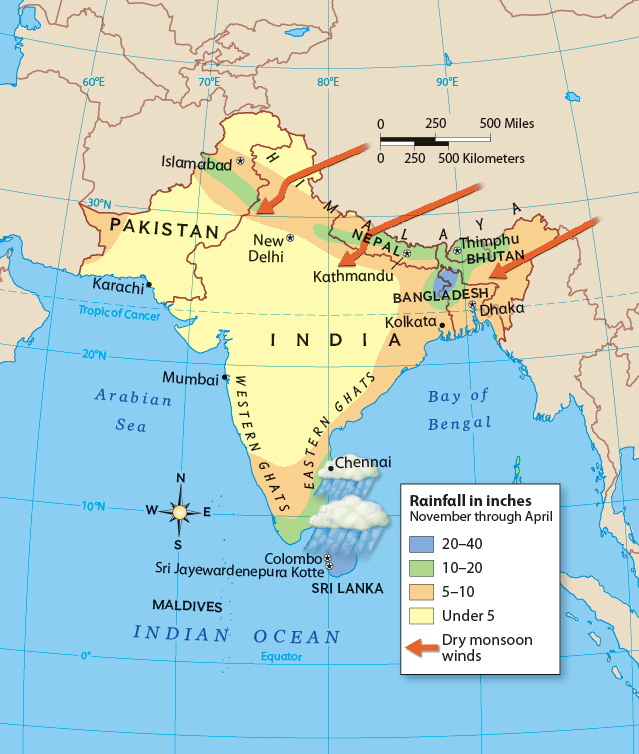
• Winter Monsoon Map: Average Winter Precipitation
• Winter Monsoon Map: Average Winter Precipitation
 Monsoons are seasonal winds that bring a lot of rainfall during part of the year. These strong wind patterns are a main feature of South Asia's climate. Monsoons are seasonal winds that bring a lot of rainfall during part of the year. These strong wind patterns are a main feature of South Asia's climate.Summer: Wet Monsoons
From May to early October, winds blow northward from the Indian Ocean and bring heavy rain. Some regions receive 100 inches of rain per year. They may even receive over 300 inches.
The summer monsoon rains bring water to crops. They fill reservoirs that hold lots of water. But the rains can cause floods and landslides, too. People in these regions live their lives during the monsoon season. They find ways to save their crops. They learn how to get through streets that are flooded.Winter: Dry MonsoonsFrom November to April, the winter monsoons change direction. They blow southward. The air is often dry. The dry monsoons do not cause as much rain as the wet monsoons do.
A very dry monsoon season can kill crops. It can hurt the region's economy. People store water during the wet monsoons to prepare for the dry monsoon season. They use this water todrink and to water their crops.

474 - 475


Student eEdition | Unit 9: South Asia





© 2011 National Geographic School Publishing
| Terms of Use & Privacy Policy